Gangster whose associate was critically wounded in Surrey last week has been remanded in custody until Wednesday on an alleged breach of his court conditions. Sukhveer Dhak, 27, appeared via video link in Surrey Provincial Court Friday. Dhak was with his pal Jujhar Singh Khun-Khun in the 10100-block of 144th at around 9: 30 p.m. on Sept. 16 when gunmen opened fire, hitting Khun-Khun several times before fleeing. Khun-Khun remains in hospital in critical condition. Dhak was picked up Sept. 18 for allegedly violating court conditions on a drug conspiracy charge laid in 2008. He is due to go to trial on that case in November. Earlier this week, the head of the Gang Task Force warned that anyone associated with the Dhak and Duhre crime groups could get caught in an escalating gang war. Supt. Tom McCluskie said gang investigators "have reason to believe these people are being targeted by other criminal groups." And he said his team is probing possible links between the Khun-Khun shooting and the fatal shooting in Kelowna on Aug. 14 of Red Scorpion Jonathan Bacon. Hells Angel Larry Amero and Independent Soldier James Riach were also wounded in that incident. Since the high-profile public shooting outside a busy lakeside tourist hotel and casino, tensions have been escalating between associates of the victims and those they believe are responsible. On one side is an alliance consisting of the Duhres, Dhak and some United Nations members. On the other are some Hells Angels, the Scorpions and the Independent Soldiers. McCluskie said the investigation into Bacon's death is going well, though no one has yet been charged. The Duhre group is headed by three brothers - Balraj, Sandip and Paul - who grew up in North Vancouver and were once associates of the late Bindy Johal. Eldest brother Balraj was shot in a Vancouver restaurant in August 2005, but survived. Sandip escaped injury when his car was sprayed with gunfire at a Surrey convenience store in May 2005, but his friend Dean Mohamed Elshamy was killed. And both Balraj and Sandip were shot at in July 2005 as they drove through east Vancouver. Their bulletproof sedan saved their lives. Sukh Dhak is the younger brother of Gurmit Dhak, who was gunned down outside Metrotown Mall in October 2010. Gurmit Dhak, then 32, was also shot in 2007 in a crowded Kitsilano restaurant. Both Dhaks have been associated with a criminal organization dubbed "Billy's Crew."


 Two brazen, targeted shootings of known British Columbia gangsters in less than a month may be the kindling that sparks renewed gang warfare in the Lower Mainland, say police. The officer who heads the province's gangs task force issued an "unusual" alert Tuesday to anyone with links to two notorious crime families after a known gangster was shot and wounded last week in Surrey, B.C. Supt. Tom McCluskie told reporters both that incident and the high-profile slaying of Red Scorpions' gang boss Jonathan Bacon in August amount to a high expectation by his 80 investigators that more attacks are on the way. "We're anticipating retaliatory violence, yes," he said at a news conference held at an office of the Combined Forces Special Enforcement Unit in Delta, B.C. "I'm not trying to instill fear in the citizens, but certainly there's enough tension in there that we're concerned there will be a retaliation, that there will be further violence." The 24-year-old man shot in his car on Friday was a known member of the Dhak crime group, which police say runs an illegal drug ring throughout the Lower Mainland. One member of that family, Gurmit Dhak, was shot dead in his BMW at a suburban Burnaby mall last October, in another scenario police said was planned. Anyone with ties to either the Dhak or Duhre crime families are currently believed to be in heightened danger, and hanging around with such people could result in peril, McCluskie said. He said he's especially concerned for the members' girl friends and those who are simply connected on the social scene. Members of both groups have been linked to criminal activity on numerous occasions by police in B.C. in the past. While the public is not the intended target, McCluskie said, there's no telling where or when the tension will flare up again as gang rivalries rear their ugly head. It means bystanders could even get caught in the crossfire, he said. Thirty-year-old Bacon was shot to death outside a posh hotel in Kelowna. The gunfire that put the latest gangster in hospital broke out on a city street. "It's the fact these guys don't care where it is, they have no regard whatsoever for the general public," McCluskie said. Officers are examining the possibility the two incidents are directly linked, although at this point it's too early to draw conclusions, he said. "As of right now we haven't made any confirmed connection." The news conference is the most vocal and direct police have been in declaring expectations around the possibility of more bloodshed since Bacon died. Tit-for-tat clashes became a weekly occurrence for several months back in 2009, as turf battles played out in the Lower Mainland. There were at least four dozen shootings that year in the Vancouver area alone. Tensions were reduced to simmering, however, as police changed their strategy, made arrests of prominent players and conducted more behind-the-scenes enforcement. Police say alarm bells went off for many dealing with the organized crime world when Bacon was unexpectedly taken out. A full-patch member of the Hells Angels and another alleged gang member were hit by the mid-day volley of gunfire on Aug. 14, while two others accompanying them in a luxury SUV were also wounded. McCluskie said he's "pleased" with how his team is progressing in that investigation, but couldn't say when any arrests may be made. McCluskie wouldn't give any details about the new "intelligence" his team has gathered suggesting people tied to the two families are in danger, in order to protect the investigation. He said officers have already conducted several "duty-to-warns," telling known gang members they have reason to believe they might be next. "I'm not confident it reaches all those individuals, I'm hopeful," he said, noting he's less concerned about giving the groups credence by putting out the warning than letting the public know the risks. "Quite often the gangs don't listen to us very well."
 Suspected drug traffickers dumped 35 bodies at rush hour beneath a busy overpass in the heart of a major Gulf coast city as gunmen pointed weapons at frightened drivers. Mexican authorities said Wednesday they are examining surveillance video for clues to who committed the crime. Horrified motorists grabbed cell phones and sent Twitter messages warning others to avoid the area near the biggest shopping mall in Boca del Rio, part of the metropolitan area of Veracruz city. The gruesome gesture marked a sharp escalation in cartel violence in Veracruz state, which sits on an important route for drugs and Central American migrants heading north. The Zetas drug cartel has been battling other gangs for control of the state. Prosecutors said it's too soon to draw conclusions from the surveillance video. "We're not going to confirm or deny anything," Veracruz state Attorney General Reynaldo Escobar Perez told the Televisa network Wednesday. "We're looking at it in different ways, we're seeing different numbers, that's why we don't want to get ahead of ourselves." Escobar said the bodies were left piled in two trucks and on the ground under the overpass near the statue of the Voladores de Papantla, ritual dancers from Veracruz state. He said some of the victims had their heads covered with black plastic bags and showed signs of torture. Police had identified seven of the victims so far and all had criminal records for murder, drug dealing, kidnapping and extortion and were linked to organized crime, Escobar said. Motorists posted Twitter warnings said the masked gunmen were in military uniforms and were blocking Manuel Avila Camacho Boulevard. "They don't seem to be soldiers or police," one tweet read. Another said, "Don't go through that area, there is danger." Veracruz is currently hosting a conference of Mexico's top state and federal prosecutors and judiciary officials. Local media said that 12 of the victims were women and that some of the dead men had been among prisoners who escaped from three Veracruz prisons on Monday, but Escobar denied the escaped convicts were among the dead. At least 32 inmates got away from the three Veracruz prisons. Police recaptured 14 of them. Drug violence has claimed more than 35,000 lives across Mexico since 2006, according to government figures. Others put the number at more than 40,000.
 The three tiny squirrel monkeys led a life of luxury on a 16-acre ranch, surrounded by extravagant gardens and barns built for purebred horses. More than 200 animals, ranging from mules to peacocks and ostriches, lived on the ranch in central Mexico and hundreds more stayed on two related properties, many in opulent enclosures. Also kept on the grounds were less furry fare: AK-47 assault rifles, Berrettas, hundreds of other weapons and cocaine. The ranch's owner was Jesus "The King" Zambada, a leader of the powerful Sinaloa drug cartel. He had developed a love for exotic species shared with other kingpins. Just two days before Zambada's arrest, police confiscated two tigers and two lions from a drug gang hideout on the forested outskirts of Mexico City. As federal authorities capture a growing number of gang leaders, many of their pets are being driven from their gilded cages into more modest housing in the country's zoos. That's proved overwhelming for some institutions, which are struggling to cope with the influx. But it's also giving Mexican animal lovers a bounty of new creatures to admire. Like Zambada, who was apprehended in October 2008, the squirrel monkeys sit in state custody, chirping away at gawking children at the Zacango Zoo, about an hour outside Mexico City. Their previous home "was a very big enclosure made of good quality material," said Manlio Nucamendi, the zoo's coordinator. "But they didn't have the right diet and medical attention." Mexican forces have discovered drug cartel private zoos that housed tigers, panthers and lions among other animals of exotic breeds, though the federal Attorney General's Office, which supervises all seizures from drug gangs, couldn't provide an exact count of the number of animals seized. Whatever the number, officials have been challenged to house the armies of confiscated drug cartel animals. "Within the limited resources of the Mexican government, there are a lot of efforts to ensure the welfare of these animals," said Adrian Reuter Cortes of the conservation group the World Wildlife Fund in Mexico. "But even the zoos have limits, and can't welcome all the animals." The government usually calls zoos for help because they have the expertise, equipment and vehicles to transport large animals, said Frank Carlos Camacho, executive director of the wild animal park Africam Safari in the central Mexico city of Puebla and president of the national association of zoos. "There's some risk involved in handling animals like big cats, bears and large herbivores," Camacho said. He said he has heard of drug cartel zoos that included giraffes, buffalos and camels. As the cinematic gangster film "Scarface" portrayed in 1983, private zoos have long been considered status symbols for drug kingpins eager to show off their wealth. Descendants of Colombian drug boss Pablo Escobar's hippopotamuses still roam his private zoo in Colombia, which became state property after his killing and is now a tourist attraction. Three of the beasts escaped and lived in the wild for two years. Some kingpins also use the beasts for more nefarious purposes. Leaders of the ruthless Mexican Zetas cartel have been rumored to feed victims to lions and tigers kept in their properties, local media have reported. Animals are also used in the drug trade as smugglers. Over the past couple of years, traffickers have tried to ship drugs inside frozen, cocaine-stuffed sharks, snakes fed with bags of cocaine and bags filled with transparent liquid cocaine inside containers shipping tropical fish, Reuter Cortes said. As with drugs, Mexico is a main corridor for the illegal trafficking of animals to the United States. The country also has a healthy domestic demand for animals, with big cats found in some urban markets. In July, Mexican authorities seized more than 5,500 illegal animals and plants during a nationwide three-day operation. Not all exotic animals, however, are as lucky as Zambada's monkeys. Many animals found in drug cartel captivity or in private homes suffer from malnutrition or have been de-clawed or de-fanged, said Nucamendi. "It's a symbol of status and power," he said. "It's a bizarre psychology for the people that keep these animals." As he showed off the zoo's grounds on a recent afternoon, Nucamendi jumped over a barrier and knelt to greet Diego, a 2-year-old jaguar, who responded by pressing his face against the chain-link fence. Diego's former owners in Tijuana used to charge for pictures with him, Nucamendi said. Elsewhere in the zoo was a 3-decade-old elephant seized from a circus because his owners didn't have the proper permits. Workers joke that the elephant is an illegal immigrant because he was sneaked from the U.S. to Mexico. An 8-month-old male lion cub, also called Diego, arrived malnourished from private owners. Now fatter, Diego plays with two other lion cubs also on exhibit. As for the squirrel monkeys, they'll be moved to a bigger exhibit being planned in a remodeling of the zoo. Although some of the confiscated animals had finer housing before, their new homes offer genuine care from the people watching them. "It's more important for us to guarantee the welfare of these animals than the criminal investigations," Nucamendi said. "That's our duty. We offer our bodies and souls for the welfare of these animals."
 number of gang members in pre-trial custody continues to grow, B.C. pre-trial jails are struggling to deal with tensions between rival groups. The latest attack at North Fraser last week was particularly serious: gangster Hanif Emambakhsh ended up with a broken neck in the assault. He has had links to the Red Scorpions and more recently the break-away Red Lions. Apparently he has a massive Lion tattoed on his back. He is expected to survive. Coquitlam RCMP says they are getting little help with the investigation. Things are particularly tense in North Fraser and in Kamloops, according to union representative Dean Purdy. Interestingly, while the B.C. government keeps track of how many inmate on inmate assaults take place, they don’t maintain a record of how many are gang-linked. I think it is disturbing that a known gang member has been putting money in the accounts of pre-trial inmates. This particular person is linked to the Independent Soldiers. I don’t know if he is the one who paid for Emambakhsh to get beaten. The government official confirmed to me that ANYONE, including a known gangster or convicted drug trafficker, can go up to the counter at a pre-trial jail and put money in the account of an inmate. There is no limit on the amount that can be put in. The funder has to show ID, but that’s it. So it is easy for gangs to pay people to beat up other inmates.
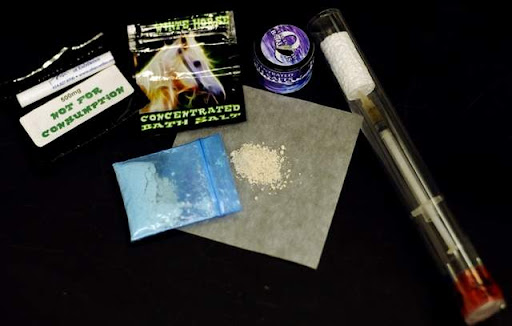 The U.S Drug Enforcement Agency's war on drugs continues with a nationwide ban of synthetic cocaine. Labeled as bath salts, the hallucinogenic drug has become more available in the Grand Junction area as part of a trend seen across the country. In response to increased emergency room visits, the federal agency has moved to emergency control these synthetic stimulants. This action makes it illegal to possess or sell Mephedrone, Methylenedioxypyrovalerone (MDPV), and Methylone or any products containing them for the next year. These chemicals are most often found in forms of 'legal ecstasy' or 'legal cocaine.' During the temporary ban, the DEA will team up with the U.S. Department of Health and Human Services to further study whether these chemicals should be permanently banned. In June, we introduced you to these bath salts in this article. Back then, they were an unregulated drug taking the place of recently banned synthetic forms of marijuana. "It is actually like a synthetic cocaine slash methamphetamine," Jim Schrant with the DEA told us at the time. "So, it's really the worst of both." The bath salts sell at a price of $40 per gram. They are mainly sold at smoke shops. But, in June, Schrant told us that his agency could not find any local dealers. Today, there are at least two. "They're putting it into packaging which is pleasing to the eye with market names of "Blue Dreams," things like that," Schrant said. "And, they're intentionally trying to target that young adult crowd." As part of this emergency control, businesses and citizens have 30 days to get rid of the banned products. At that time, the DEA will publish a Final Order in the Federal Register making the drugs Scheduled 1 substances. That category is the harshest and is reserved for unsafe, highly abused chemicals with no known medical use in the U.S. Violating that law is punishable by jail time. Employees at smoke shops in the area tell us that synthetic cocaine isn't that popular. But, local high school students have heard all about it. "I don't think they care if it's legal," Grand Junction High School freshman Hannah Rady said of some of her classmates. "Nobody does." Just like K2 and Spice, bath salts are labeled "not for human consumption." But, these students say that is not stopping anyone and neither is the law. "People just ask me 'Have you done spice before?' I'm just like, 'No,'" GJHS freshman Emilio Lazcano said. He knows Governor John Hickenlooper made those forms of synthetic marijuana illegal starting July 1, but he says fellow classmates continue to tell bother about it. "They're like 'Oh, well you're supposed to smoke it like this and that,' and I'm like 'Oh, well cool. I'm not really into that stuff.'" "They tell us that it doesn't make their eyes red, so it's way easier to bypass by your parents," GJHS junior Joe Gedscad added. The most common symptoms of these synthetic stimulants include impaired perception, reduced motor control, disorientation, extreme paranoia, and violent episodes. The DEA says the long-term physical and psychological effects are not known but potentially severe. Including Colorado, 33 states have already taken action to control or ban other synthetic stimulants. Most states pass these laws after the DEA files an emergency control on certain chemicals.